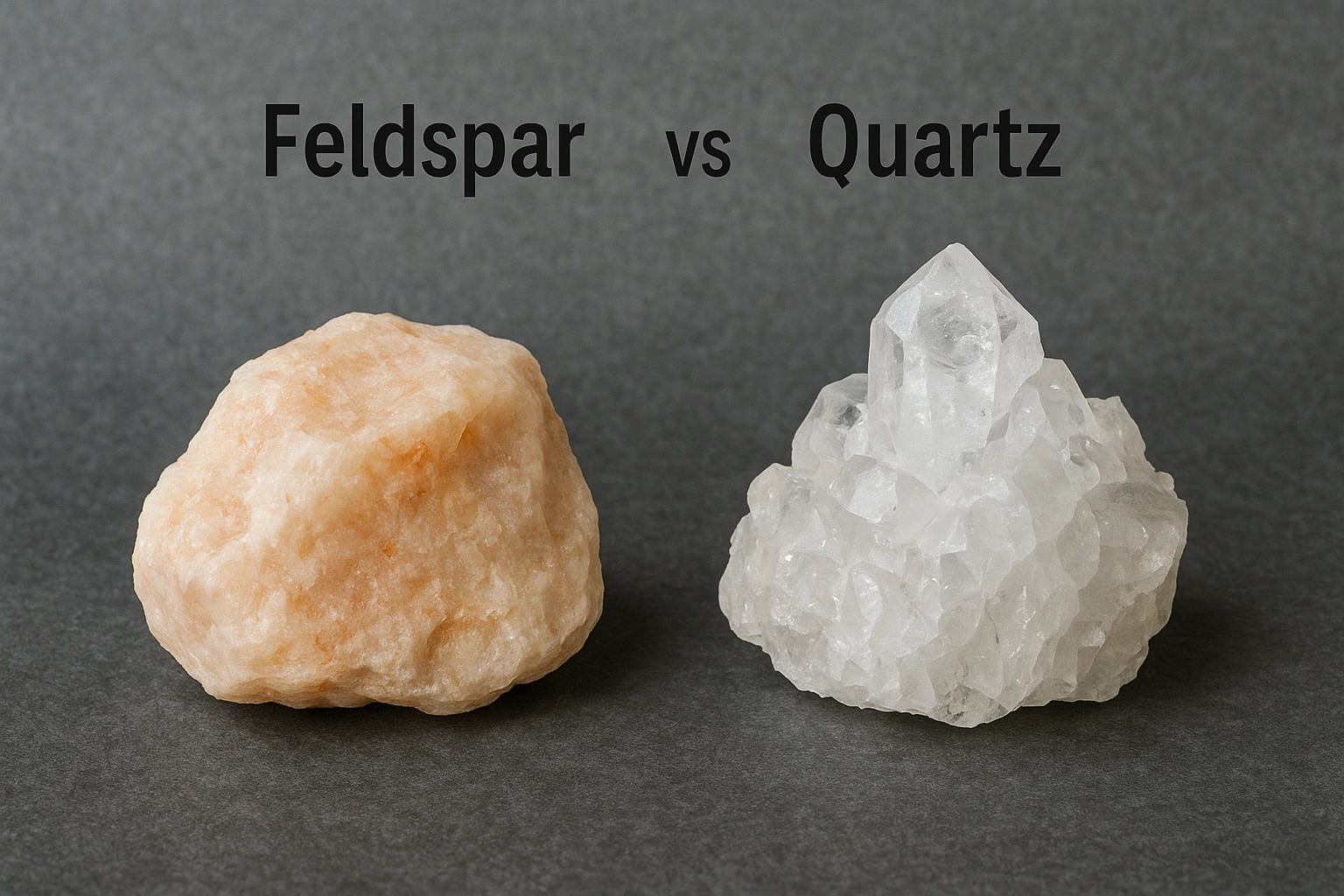

Quartz and Feldspar
When people talk about common minerals found in the Earth’s crust, Quartz and Feldspar always comes up. These two minerals are abundant, often forming the backbone of igneous, metamorphic, and sedimentary rocks. At first glance, Quartz and Feldspar may look somewhat similar, which is why many beginners confuse them. However, once you dive deeper, the contrasts are quite clear. From their chemical structures to their visual appearances, each mineral tells a unique story about how it formed. Understanding these differences helps geologists, students, and even hobbyists in identifying rocks more accurately.
Beyond quartz and feldspar, other minerals also have major industrial importance. If you’re sourcing high-quality materials, explore trusted Bentonite Suppliers offering premium grades for drilling, foundry, and purification processes.
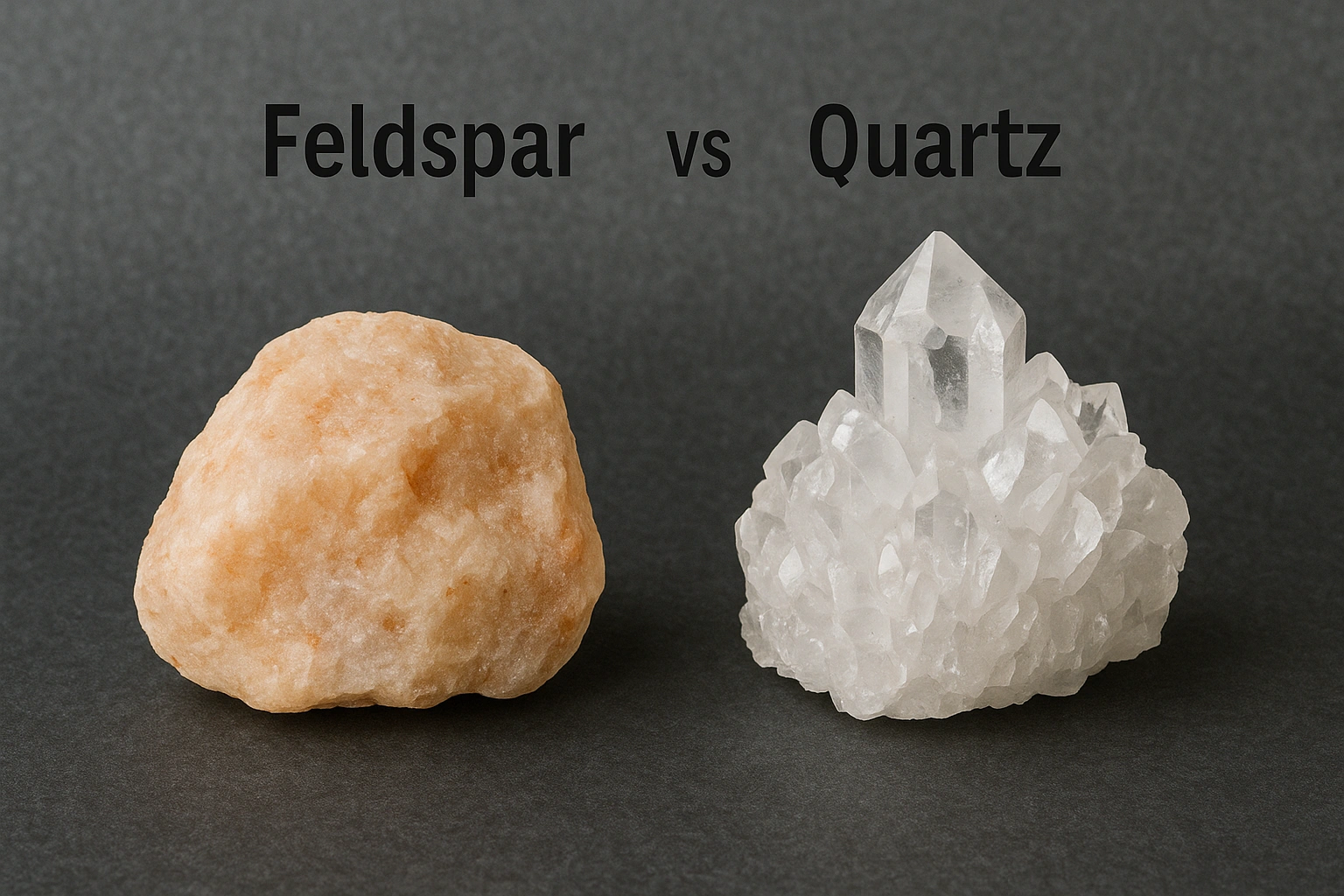
Feldspar and Quartz
Feldspar and Quartz are essential industrial minerals widely used in ceramics, glass manufacturing, and construction industries. Feldspar functions as a flux material, helping to lower the melting point and improve the mechanical strength of final products. Quartz, with its high silica content and excellent chemical stability, enhances hardness, thermal resistance, and transparency. The balanced use of feldspar and quartz in industrial processes ensures consistent quality, improved performance, and reliable production outcomes across various applications.
Quartz Feldspar
Quartz Feldspar is a high-quality mineral material commonly used in ceramics, glass production, and other industrial applications. The combination of quartz feldspar provides excellent thermal stability, mechanical strength, and chemical resistance, making it suitable for demanding manufacturing processes. Due to its consistent composition and reliable performance, Quartz Feldspar is widely preferred by manufacturers seeking stable raw materials for large-scale production.
Feldspar vs Quartz
Feldspar vs Quartz highlights the key differences between these two widely used industrial minerals. Feldspar is mainly applied as a flux material to lower melting temperatures in ceramic and glass production, while Quartz is known for its high silica content, hardness, and thermal stability. This comparison helps manufacturers select the right material based on specific industrial requirements.
Chemical composition of minerals in Feldspar vs Quartz
One of the main distinctions in Feldspar vs Quartz lies in their chemical makeup. Quartz is composed of silicon dioxide (SiO₂), which gives it a clean and consistent structure. Feldspar, on the other hand, is a group of minerals that include potassium, sodium, or calcium combined with aluminum silicates. This variety makes Feldspar vs Quartz fundamentally different in terms of chemistry. Because of this, feldspar minerals tend to have more variability in color and structure, whereas quartz appears more uniform. For industries, this chemical difference influences how each mineral is processed and where it can be applied.
Crystal structure variations found in Feldspar vs Quartz
Looking at the crystal structure, Quartz and Feldspar shows a distinct separation. Quartz crystallizes in the hexagonal system, giving it a consistent six-sided symmetry. Feldspar minerals form in the triclinic or monoclinic systems, resulting in crystals that often look blocky or tabular. This structural difference is important in how the minerals break apart. Quartz typically fractures in a conchoidal pattern, leaving smooth, curved surfaces, while feldspar cleaves along flat planes. For collectors and geologists, these structural features are essential for distinguishing between the two minerals in the field.
While comparing Quartz and Feldspar highlights their differences, a deeper look at feldspar itself reveals much more. Check out our article What Is Feldspar? to learn about its types, properties, and why it plays such a vital role in ceramics and glass manufacturing.
Color and visual appearance of Feldspar vs Quartz
When it comes to appearance, Quartz and Feldspar offers striking differences that are noticeable even to the untrained eye. Quartz can appear in a variety of colors, from clear and smoky to purple amethyst or rose hues, thanks to trace elements and impurities. Feldspar often presents in earthy tones such as pink, white, gray, or brown. While quartz crystals can look transparent and glassy, feldspar usually appears opaque with a duller luster. These visual contrasts make it easier for people to identify which mineral they are looking at, especially when polished or used in decorative materials.
Hardness and durability comparison of Feldspar vs Quartz
In terms of hardness, Feldspar vs Quartz shows a measurable difference on the Mohs scale. Quartz scores a solid 7, making it harder and more resistant to scratching than feldspar, which ranges around 6 to 6.5. This difference may sound small, but in practical use, it matters a lot. For example, quartz is more durable in countertops, jewelry, and industrial applications, while feldspar is less resistant and wears down faster under constant abrasion. Durability is one of the reasons quartz is more highly valued in certain industries compared to feldspar.
Geological distribution and occurrence of Feldspar vs Quartz
Both minerals are incredibly abundant, but the way they occur differs. Feldspar vs Quartz can be found in nearly all types of rocks, but feldspar is more common in igneous rocks like granite, while quartz dominates in sandstones and metamorphic rocks like quartzite. In fact, feldspar makes up about 60% of the Earth’s crust, while quartz is the second most abundant mineral. Their widespread presence means that almost anywhere you go, you’re likely to encounter one or both of these minerals in some form. This abundance also influences their availability in industrial and commercial markets.
Weathering and alteration patterns in Feldspar vs Quartz
Weathering plays an important role in how Quartz and Feldspar behaves over time. Quartz is highly resistant to chemical weathering, which is why sand grains on beaches are often composed of quartz. Feldspar, however, weathers more easily and often alters into clay minerals like kaolinite. This difference explains why feldspar is less common in sedimentary rocks compared to quartz, which can survive long transport and erosion cycles. For soil formation, feldspar contributes to the nutrient base by releasing essential elements, while quartz remains more of an inert component.
Mineral uses extend even into households. One popular example is Bentonite Clay Cat Litter, valued for its superior clumping ability and odor control, making it the top choice for pet owners seeking natural and effective cat litter solutions.
Industrial and commercial uses of Feldspar vs Quartz
The uses of Feldspar vs Quartz in industries are quite distinct. Quartz is essential in glassmaking, electronics, and as a component in concrete and abrasives. Feldspar, on the other hand, is a critical ingredient in ceramics, tiles, and glass manufacturing, where it helps lower the melting temperature of the mixture. The differences in chemical and physical properties explain why industries favor one over the other in specific contexts. For example, quartz is indispensable in modern technology, while feldspar dominates in traditional ceramic production.
Architectural and decorative applications of Feldspar vs Quartz
From an architectural point of view, Feldspar vs Quartz also holds significant importance. Quartz is widely used in kitchen countertops, flooring, and wall cladding due to its durability and polished finish. Feldspar, while less durable, still finds use in decorative tiles, bathroom fixtures, and ornamental stones. The visual contrast between these minerals—glassy quartz versus earthy feldspar—makes them appealing in different design contexts. Builders and designers often choose quartz when they need resilience and feldspar when they want warm, natural tones in a project.
Identification methods for distinguishing Feldspar vs Quartz
For students, collectors, or geologists, telling Quartz and Feldspar apart in the field can be tricky but manageable with the right techniques. The hardness test is one of the most reliable methods—quartz will scratch glass easily, while feldspar may not. Crystal habit also provides clues, with quartz forming hexagonal shapes and feldspar breaking along flat cleavage planes. Color is another guide, but it should be used carefully since both can appear in multiple shades. With practice, these identification methods become second nature, helping people quickly differentiate between the two minerals.
For those interested in industrial applications, it’s worth exploring how quartz is processed into fine powder. Our detailed guide on What is Quartz Powder? explains its production methods, uses in glass, ceramics, and paints, and why it differs from raw quartz in everyday use.