Introduction: Choosing a Bentonite Supplier Requires More Than Comparing Prices
Selecting a bentonite supplier is an important decision for companies that purchase industrial minerals in bulk quantities. Although many suppliers offer bentonite products, differences in mineral composition, processing methods, quality control procedures, and export experience can significantly affect the final performance of the material.
For industrial buyers, the lowest quotation does not always represent the best purchasing decision. A supplier providing inconsistent quality, incomplete documentation, or unsuitable material specifications may create additional costs during production.
A reliable bentonite exporter should be able to demonstrate:
- Consistent product quality
- Clear technical specifications
- Proper quality documentation
- Understanding of the buyer’s application
- Ability to handle international supply requirements
This guide explains the most important factors buyers should evaluate before selecting a bentonite supplier for bulk orders.
Why Bentonite Supplier Selection Matters
Bentonite is used across different industries, including:
Before evaluating suppliers, buyers should first understand the basic properties, composition, and characteristics of bentonite as an industrial mineral.
- Oil and gas drilling
- Foundry casting
- Construction and civil engineering
- Environmental sealing
- Cat litter manufacturing
- Industrial absorbents
However, these industries do not require identical bentonite properties.
For example:
A drilling fluid manufacturer may focus on viscosity, filtration control, and rheological behavior, while a cat litter producer may prioritize swelling capacity, absorption, and clumping performance.
Therefore, selecting a supplier without considering the final application can lead to unsuitable material selection.
Step 1: Understand Which Bentonite Grade You Need
Before evaluating suppliers, buyers should clearly define the required bentonite characteristics.
The term “bentonite” alone does not describe a complete product specification.
Buyers should evaluate available industrial bentonite products based on their application requirements, technical specifications, and required performance characteristics.
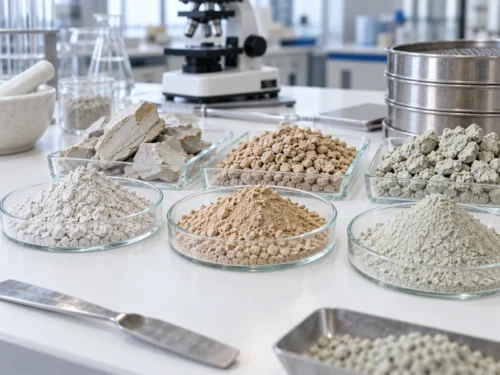
Important classifications include:
| Bentonite Type | Main Characteristics | Common Applications |
|---|---|---|
| Sodium Bentonite | High swelling capacity and water absorption | Drilling fluids, sealing, cat litter |
| Calcium Bentonite | Strong adsorption properties with lower swelling | Absorbents, industrial applications |
| Activated Bentonite | Modified performance characteristics | Specialized industrial uses |
A professional supplier should first understand the application and then recommend the suitable product specification.
Step 2: Evaluate Technical Specifications Provided by the Supplier
One of the first indicators of a professional bentonite exporter is the quality of technical information they provide.
A reliable supplier should provide detailed specifications rather than general statements such as “premium quality bentonite.”
Important parameters may include:
| Parameter | Importance for Buyers |
|---|---|
| Montmorillonite content | Indicates the active clay mineral fraction |
| Swelling index | Important for sealing and absorbent applications |
| Moisture content | Affects storage, transportation, and processing |
| Particle size distribution | Influences product performance |
| Viscosity | Critical for drilling applications |
| pH value | Important for compatibility with industrial processes |
The required specification depends on the intended use.
Step 3: Check Quality Control and Testing Procedures
Consistency between shipments is one of the most important concerns when purchasing industrial minerals internationally.
Before selecting a supplier, buyers should ask:
- How is the material tested?
- Are laboratory reports available?
- Are specifications controlled for every shipment?
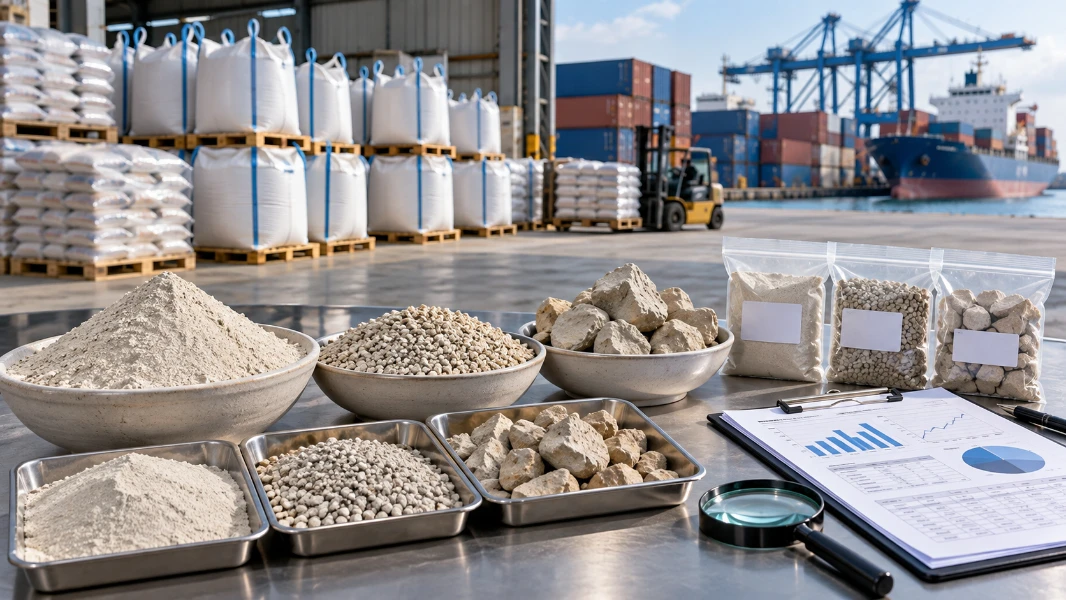
- Can samples be provided before bulk orders?
Common quality documents include:
| Document | Purpose |
|---|---|
| Technical Data Sheet (TDS) | Provides product specifications |
| Certificate of Analysis (COA) | Confirms laboratory test results |
| Safety Data Sheet (SDS/MSDS) | Provides handling information |
A supplier that maintains transparent testing procedures reduces uncertainty for international buyers.

Step 4: Evaluate Supplier Export Capability
Producing bentonite and exporting bentonite are two different capabilities.
International buyers should evaluate whether a supplier can manage:
- Export documentation
- International shipping coordination
- Packaging requirements
- Customs procedures
- Communication with overseas customers
For recurring purchases, supply reliability becomes as important as product quality.
For example:
A manufacturer importing several containers annually needs a supplier capable of maintaining the same specifications throughout the year, not only delivering one successful shipment.
Step 5: Review Packaging Options and Transportation Conditions
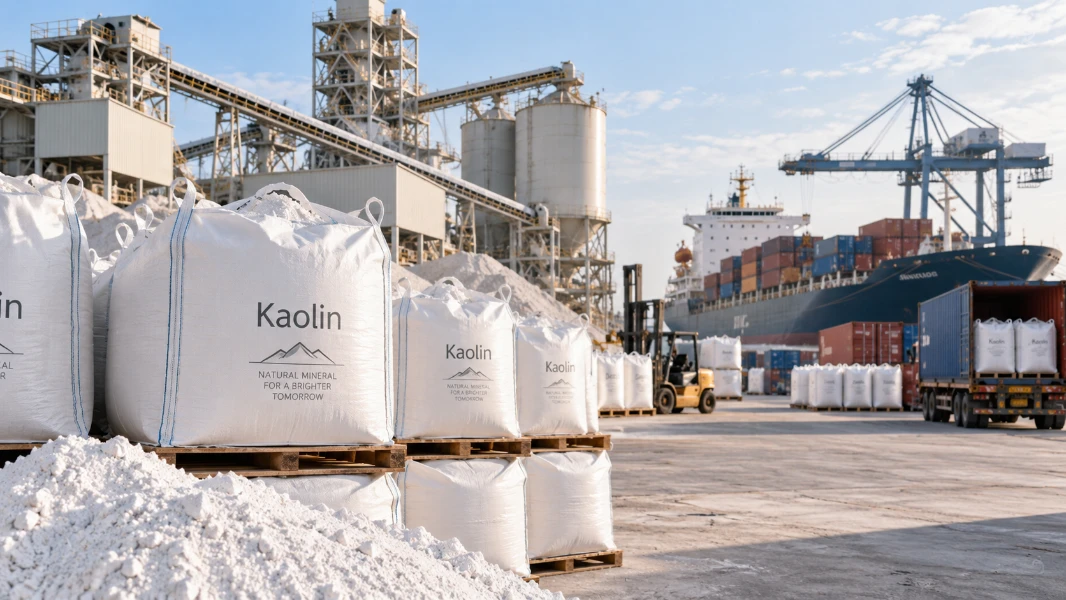
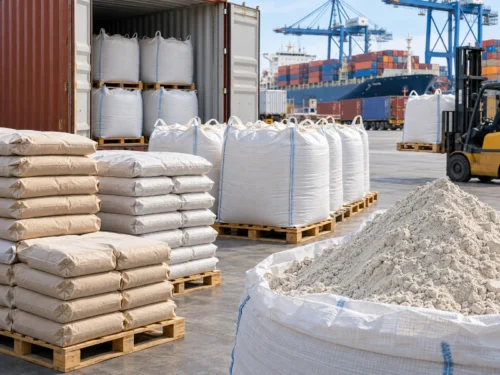
Bentonite is commonly transported internationally in different packaging formats depending on customer requirements.
Common options include:
| Packaging Type | Typical Usage |
|---|---|
| 25 kg bags | Smaller industrial orders |
| 50 kg bags | General commercial supply |
| Jumbo bags | Bulk industrial shipments |
Buyers should also consider:
- Moisture protection
- Storage conditions
- Container loading method
- Destination requirements
Proper packaging helps maintain product quality during long-distance transportation.
Step 6: Compare Bentonite Suppliers Using a Practical Checklist
Before making a final decision, buyers can evaluate suppliers using the following checklist:
| Evaluation Factor | Questions to Ask |
|---|---|
| Product quality | Are technical specifications clearly provided? |
| Consistency | Can the supplier maintain the same quality in future shipments? |
| Testing | Are laboratory reports available? |
| Experience | Does the supplier understand international trade requirements? |
| Communication | Can technical questions be answered clearly? |
| Flexibility | Can specifications be adjusted based on application? |
Common Mistakes When Selecting a Bentonite Exporter
Choosing Only Based on Price
Price is an important factor, but purchasing decisions based only on the lowest offer can create problems.
Potential issues include:
- Variable product quality
- Higher consumption during production
- Additional processing costs
- Delays caused by unsuitable material
Buying Without Reviewing Samples
For industrial applications, testing samples before large orders is often recommended.
A sample evaluation allows buyers to verify whether the material meets their production requirements.
Ignoring Supplier Communication Quality
Technical communication is often overlooked.
A supplier that can clearly explain:
- Product specifications
- Testing methods
- Packaging options
- Shipping procedures
usually provides a smoother purchasing experience.
Questions to Ask Before Ordering Bentonite in Bulk
Before placing a bulk order, buyers should ask:
What type of bentonite is supplied?
Understanding whether the product is sodium, calcium, or another grade is essential.
Can the supplier provide technical documents?
A professional exporter should be able to provide product specifications and quality documentation.
Is the material suitable for my application?
The supplier should understand the intended use rather than offering the same product for every industry.
Can the supplier support long-term supply?
For industrial buyers, consistent future availability is often more valuable than a single shipment.
How International Buyers Can Reduce Bentonite Purchasing Risks
A structured purchasing process can reduce risks:
- Define application requirements
- Request technical specifications
- Evaluate samples
- Review supplier documentation
- Confirm packaging and logistics
- Start with a verified shipment before expanding orders
This approach helps buyers build reliable long-term supply relationships.
Frequently Asked Questions (FAQ)
What should I consider when choosing a bentonite supplier?
Buyers should evaluate technical specifications, quality documentation, testing procedures, export experience, packaging options, and supply consistency.
Why are bentonite specifications important?
Different industries require different bentonite properties. Specifications help ensure that the material performs correctly in the intended application.
What documents should a bentonite exporter provide?
Common documents include Technical Data Sheets (TDS), Certificates of Analysis (COA), and Safety Data Sheets (SDS/MSDS).
Should I test bentonite samples before bulk purchasing?
Yes. Sample testing helps buyers confirm that the material meets their production requirements before placing large orders.
How can I compare different bentonite suppliers?
Compare suppliers based on product consistency, technical support, documentation, export capability, and ability to meet your specific requirements.
Looking for a reliable partner for industrial mineral sourcing?
Vornaco is an industrial mineral sourcing partner for international buyers seeking reliable supply solutions, technical information, and export support.
Conclusion
Choosing a reliable bentonite exporter requires a technical and structured evaluation process. Product quality, documentation, export capability, and application knowledge are key factors that determine whether a supplier can support long-term industrial requirements.
For companies purchasing bentonite in bulk, selecting the right supplier is not only about finding a source of material; it is about building a dependable supply relationship that supports consistent production performance.