Introduction
Kaolin is one of the most important industrial minerals used in a wide range of manufacturing applications, including ceramics, coatings, plastics, paper, and construction materials. However, kaolin is not always used in its natural form. Depending on the required performance, it can be processed through different methods to create materials with specific characteristics.
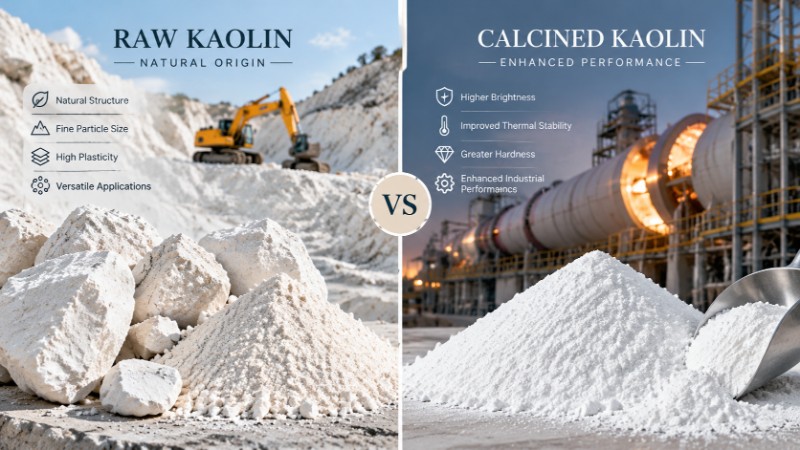
Two important forms of this mineral are raw kaolin and calcined kaolin. While both originate from kaolinite-rich clay, the processing method creates significant differences in their physical properties, structure, and industrial applications.
Understanding the differences between calcined kaolin vs raw kaolin helps manufacturers select the right material based on performance requirements, production processes, and final product expectations.
What Is Raw Kaolin?
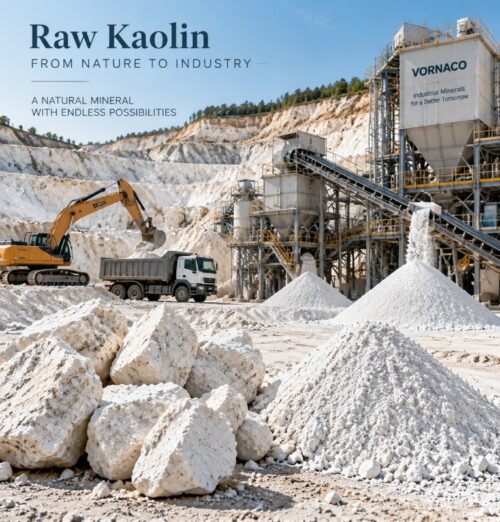
Raw kaolin is the naturally occurring form of kaolin clay obtained from mineral deposits after extraction and processing steps such as washing, purification, and classification.
It mainly consists of the clay mineral kaolinite, along with small amounts of other minerals depending on the geological source.
Raw kaolin is valued for properties such as:
- Natural whiteness
- Fine particle size
- Plasticity
- Low abrasiveness
- Good suspension properties
Because of these characteristics, raw kaolin is widely used in traditional industrial applications.
What Is Calcined Kaolin?
Calcined kaolin is produced by heating raw kaolin at controlled high temperatures through a process known as calcination.
During this thermal treatment, the crystal structure of kaolinite changes, removing chemically bonded water and creating a material with different physical and performance characteristics.
Compared with raw kaolin, calcined kaolin typically provides:
- Higher opacity
- Improved chemical stability
- Increased hardness
- Better heat resistance
- Enhanced performance in specialized applications
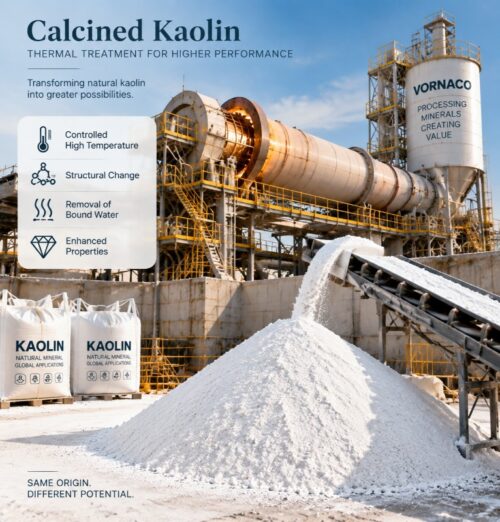
Calcined kaolin is widely used in various industrial applications due to its modified properties after thermal treatment. For a more detailed explanation of its production process, characteristics, and industrial uses, explore our guide on what is calcined kaolin.
Key Differences Between Calcined Kaolin and Raw Kaolin
1. Processing Method
The biggest difference between raw and calcined kaolin is the production process.
Raw Kaolin
Raw kaolin requires processes such as:
- Mining
- Crushing
- Washing
- Classification
- Drying
The natural mineral structure remains mostly unchanged.
Calcined Kaolin
Calcined kaolin requires an additional thermal treatment stage.
During calcination:
- The material is heated at controlled temperatures.
- Structural water is removed.
- The mineral structure is modified.
This process creates new properties that are useful for advanced industrial applications.
2. Physical and Chemical Properties
Raw Kaolin Properties
Raw kaolin is commonly selected when manufacturers need:
- Natural plasticity
- Good workability
- Fine particle distribution
- Smooth processing behavior
These properties make it suitable for applications where the natural clay characteristics are important.
Calcined Kaolin Properties
Calcined kaolin offers different advantages:
- Higher brightness
- Improved opacity
- Better dimensional stability
- Increased resistance to heat and chemicals
These characteristics make calcined kaolin suitable for applications requiring enhanced performance.
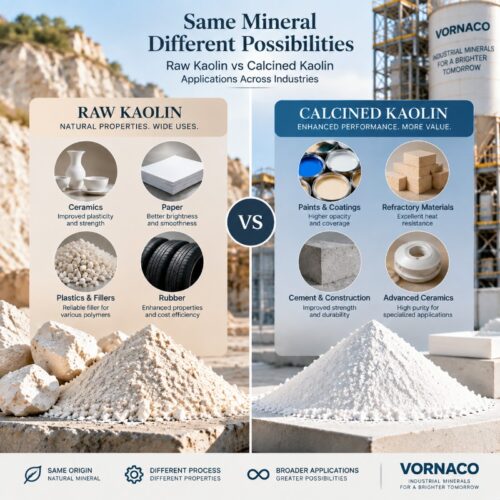
Raw Kaolin Applications
Ceramic Industry
Raw kaolin is widely used in ceramic manufacturing because of its:
- Plasticity
- White firing characteristics
- Contribution to ceramic strength
It plays an important role in producing products such as porcelain, tiles, and ceramic bodies.
Paper Manufacturing
In paper production, kaolin can improve:
- Surface smoothness
- Brightness
- Print quality
The specific grade required depends on the technical requirements of the paper application.
General Industrial Fillers
Raw kaolin is also used as a filler material in industries such as:
- Plastics
- Rubber
- Adhesives
where particle characteristics and mineral stability are important.
Calcined Kaolin Applications
Paints and Coatings
One of the major applications of calcined kaolin is in coatings.
It can improve:
- Opacity
- Coverage
- Durability
- Surface performance
Calcined kaolin is often selected for high-performance coating formulations where additional functional properties are required.
Beyond industrial applications, certain kaolin grades are also used in personal care products. The characteristics of kaolin used in cosmetic formulations can differ depending on purity, particle size, and intended use. Learn more about kaolin clay for skin applications.
Advanced Ceramics and Refractory Applications
Because of its thermal stability, calcined kaolin is used in specialized ceramic applications requiring resistance to high temperatures.
Applications include:
- Technical ceramics
- Refractory materials
- Insulation products
Cement and Construction Materials
Certain calcined kaolin products, especially metakaolin, are used as reactive mineral additives in cement-based materials due to their pozzolanic properties.
Calcined Kaolin vs Raw Kaolin: Which One Should You Choose?
The correct choice depends on the final application.
Choose raw kaolin when you need:
✅ Natural clay properties
✅ Plasticity
✅ Ceramic processing advantages
✅ General industrial applications
Choose calcined kaolin when you need:
✅ Higher opacity
✅ Better thermal stability
✅ Improved durability
✅ Specialized industrial performance
There is no universally better option; the suitable choice depends on product requirements and manufacturing conditions.
Factors to Consider Before Selecting Kaolin
Before choosing between raw and calcined kaolin, manufacturers should evaluate:
Application Requirements
Different industries require different mineral characteristics.
Particle Size
Particle distribution affects processing behavior and final performance.
Brightness and Purity
These factors are especially important in applications where appearance matters.
Technical Specifications
Reliable mineral suppliers should provide detailed information about:
- Chemical composition
- Moisture content
- Particle size
- Quality consistency
Companies looking for consistent industrial mineral supply should evaluate reliable kaolin products based on technical specifications and application requirements.
Conclusion
The difference between calcined kaolin and raw kaolin is mainly related to processing method and resulting performance characteristics.
Raw kaolin maintains the natural properties of kaolinite and is widely used in ceramics and general industrial applications. Calcined kaolin undergoes thermal treatment to achieve enhanced properties such as higher opacity, stability, and specialized performance.
Selecting the right type of kaolin depends on the specific requirements of each industry, application, and production process.
For companies evaluating industrial mineral options, understanding these differences is an important step toward choosing the most suitable kaolin solution.
Before selecting the right kaolin type, manufacturers should also evaluate supplier reliability, product documentation, and quality consistency. A detailed kaolin supplier guide can help businesses understand the key factors involved in choosing a reliable exporter.