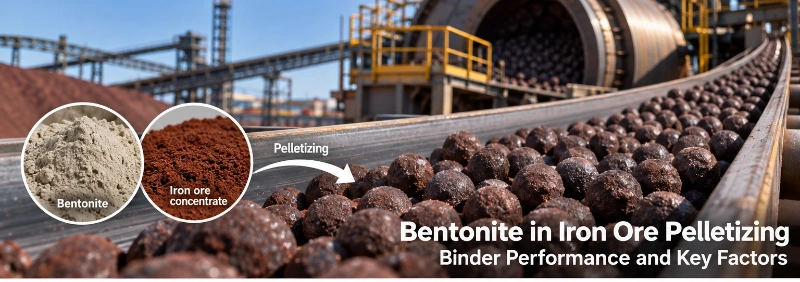
Bentonite in Iron Ore Pelletizing: Binder Performance and Key Factors
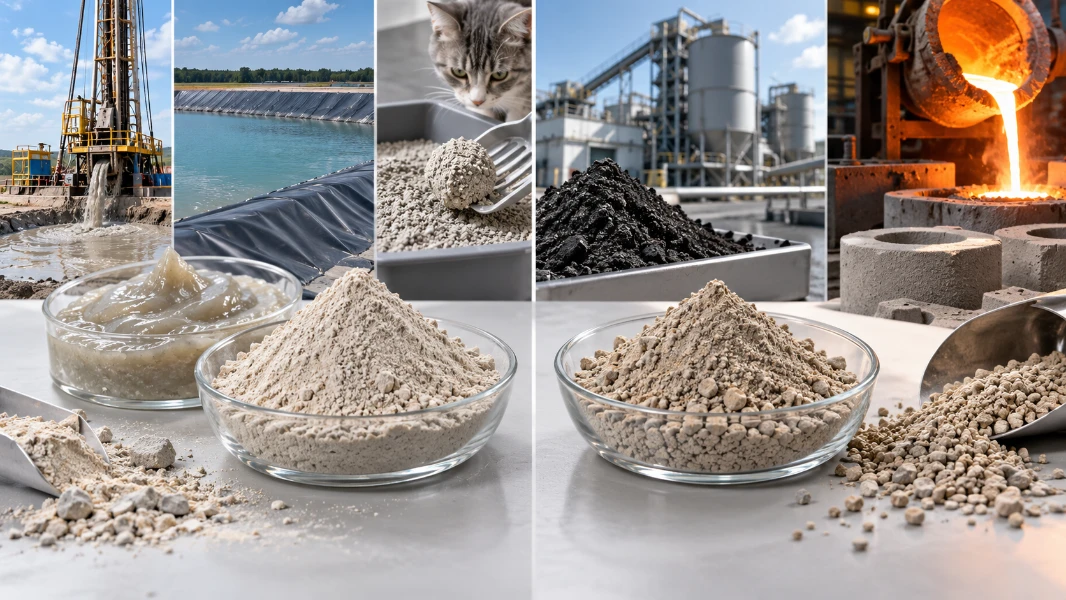
Iron ore pelletizing is an essential process in modern iron and steel production, transforming fine iron ore concentrates into durable, uniformly sized pellets suitable for subsequent thermal processing and use in ironmaking. One of the most important materials used in this process is bentonite, a clay-based binder that improves pellet formation, handling strength, and structural stability.
The effectiveness of bentonite in iron ore pelletizing depends on several factors, including its mineral composition, swelling behavior, particle size, moisture conditions, and dosage. Understanding these factors helps pelletizing plants optimize binder performance while controlling production costs and the chemical composition of finished pellets.
This guide examines how bentonite works as an iron ore pellet binder, which properties influence its effectiveness, how binder performance is evaluated, and why selecting the appropriate grade is important for industrial pellet production.
What Is the Role of Bentonite in Iron Ore Pelletizing?
Iron ore concentrates typically contain fine particles that cannot be efficiently handled in conventional ironmaking operations without agglomeration. Pelletizing converts these fine particles into larger, approximately spherical agglomerates through the controlled addition of water, binders, and mechanical rolling.
Bentonite is widely used as an inorganic binder because its clay minerals interact with water and contribute to the cohesion of iron ore particles.
During pellet formation, bentonite supports several important functions:
-
Particle cohesion: Helps maintain contact and bonding between fine iron ore particles.
-
Green pellet strength: Improves resistance to breakage before drying and firing.
-
Moisture management: Influences water distribution, plasticity, and pellet formation.
-
Pellet handling: Helps pellets withstand mechanical stresses during transfer and processing.
-
Dry pellet integrity: Can contribute to maintaining structural stability during drying.
The binder’s performance must be evaluated together with the characteristics of the iron ore concentrate and operating conditions. Increasing bentonite addition does not automatically produce better results.
Research on green pellet binding mechanisms demonstrates that binder-related cohesive forces, capillary forces, moisture saturation, and pellet plasticity interact in determining pellet strength.
How Does Bentonite Work as an Iron Ore Pellet Binder?
Bentonite contains smectite-group clay minerals, particularly montmorillonite, which have a layered structure and can interact strongly with water.
When suitable bentonite is mixed with iron ore concentrate and water, several physical mechanisms contribute to pellet formation.
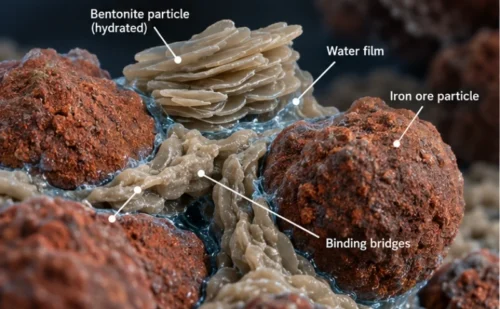
1. Hydration and Swelling
Bentonite particles absorb water and undergo hydration. Depending on the exchangeable cations and solution chemistry, swelling can promote the dispersion and distribution of clay particles within the concentrate.
This behavior contributes to the formation of a hydrated binder system between iron ore particles.
2. Cohesive Forces Between Particles
The hydrated clay phase helps form cohesive connections between mineral particles.
These connections work alongside capillary forces and other interactions in the wet pellet structure. As a result, the pellets can withstand certain mechanical stresses before thermal treatment.
3. Plasticity During Pellet Formation
An appropriate degree of plasticity allows pellets to grow and retain their shape during rolling.
However, excessive moisture or plastic deformation can weaken pellets and reduce permeability during subsequent processing.
This is why moisture content and binder dosage must be controlled as related but distinct operating variables.
Key Factors Affecting Bentonite Binder Performance
The suitability of bentonite for iron ore pelletizing cannot be determined by one property alone. Several characteristics influence how the binder behaves in a particular pelletizing system.
Montmorillonite Content and Clay Mineral Composition
The mineral composition of bentonite affects its hydration, swelling, and binding characteristics.
Montmorillonite is particularly important because of its layered clay structure and interaction with water. Nevertheless, the presence of montmorillonite alone does not establish how well a particular bentonite grade will perform.
Other mineral phases and impurities must also be considered.
Swelling Capacity and Water Interaction
Swelling capacity influences how bentonite interacts with water during mixing and pellet formation.
However, higher swelling capacity does not necessarily guarantee stronger pellets under every operating condition.
The relationship depends on factors such as iron ore particle characteristics, mixing conditions, electrolyte concentration, and total moisture content.
The dominant exchangeable cations in bentonite influence its hydration and swelling behavior, which can affect binder performance during pellet formation. To better understand these differences, explore our guide to Sodium Bentonite vs Calcium Bentonite and their properties in industrial applications.
Particle Size Distribution
Bentonite particle size can influence dispersion, hydration behavior, and contact with iron ore concentrate.
A suitable particle-size distribution supports effective mixing and helps the binder interact with the mineral particles.
Extremely fine material may also introduce handling or dust-related considerations, depending on the production system.
Moisture Content
Moisture is one of the most important variables in pelletizing operations.
Insufficient moisture may limit pellet formation, while excessive moisture can increase plastic deformation, reduce strength, and create operating difficulties.
The optimum moisture level must be established experimentally for the specific concentrate and binder combination.
Bentonite Dosage
Bentonite dosage influences pellet formation and performance, but excessive addition may increase cost and introduce unwanted gangue minerals.
A published study described bentonite addition of approximately 0.5–1.0% by weight of moist iron ore concentrate in the systems discussed. This is a literature reference, not a universal recommended dosage; actual operating requirements can differ substantially.
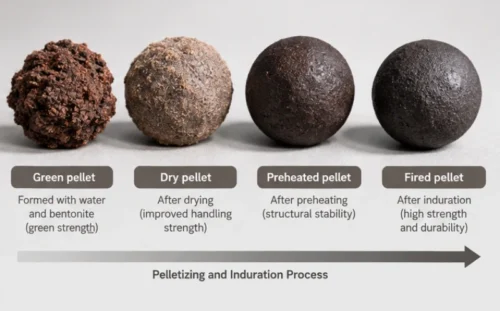
How Bentonite Affects Green and Fired Pellet Quality
The influence of bentonite changes throughout pellet production.
| Pellet Stage | Important Quality Factors | Role of Bentonite |
|---|---|---|
| Green pellets | Wet compressive strength, plasticity, drop resistance | Supports cohesion and pellet formation |
| Dry pellets | Dry strength, cracking and breakage resistance | Helps maintain pellet integrity during moisture removal |
| Preheated pellets | Structural stability during heating | Binder chemistry may affect thermal behavior |
| Fired pellets | Cold compressive strength, chemical composition, metallurgical performance | Inorganic constituents can influence bonding and final composition |
These properties should be measured under the operating conditions relevant to the plant. Good green pellet strength alone does not guarantee satisfactory fired pellet performance.
Bentonite Advantages and Limitations in Iron Ore Pelletizing
Bentonite remains a common pelletizing binder because it offers useful binding characteristics and has an established history in industrial applications.
However, it also introduces potential disadvantages that pellet producers must consider.
| Advantages | Limitations |
|---|---|
| Supports green pellet formation | Can introduce silica and alumina |
| Helps improve handling integrity | Excessive dosage may dilute total iron content |
| Offers moisture-responsive binding behavior | Performance depends on concentrate and water chemistry |
| Established industrial use | Adds binder cost and may affect downstream processing |
The silica and alumina contribution is particularly important because these constituents can affect pellet chemistry and downstream ironmaking requirements.
Research into organic and hybrid binders has partly focused on reducing these inorganic additions while preserving acceptable pellet strength.
Besides bentonite binders, fluxing materials such as Limestone may also be used in fluxed iron ore pellet production to adjust pellet chemistry and metallurgical properties. Unlike bentonite, which primarily acts as a binder, limestone provides calcium-bearing components that influence the composition of the finished pellets.
How to Evaluate Bentonite for Iron Ore Pelletizing
Industrial users should compare bentonite grades through laboratory characterization and practical pelletizing trials rather than relying only on general product descriptions.
Important evaluation criteria include:
| Evaluation Parameter | Why It Matters |
|---|---|
| Mineral composition | Identifies clay minerals and associated impurities |
| Swelling behavior | Indicates hydration-related characteristics |
| Particle size distribution | Influences mixing and binder distribution |
| Moisture content | Affects material handling and dosage calculations |
| SiO₂ and Al₂O₃ content | Helps assess contribution to pellet chemistry |
| Green pellet compressive strength | Measures resistance to compressive loading |
| Drop resistance | Evaluates behavior under impact |
| Dry pellet strength | Assesses integrity before high-temperature treatment |
| Fired pellet strength | Evaluates performance after induration |
A reliable assessment involves testing the bentonite with the actual iron ore concentrate, process water, and operating conditions.
Results obtained using one concentrate should not automatically be assumed to apply to another.
Bentonite vs Alternative Binders in Iron Ore Pelletizing
Alternative binders, particularly organic materials, have been investigated to reduce the introduction of silica and alumina into iron ore pellets.
Some organic binders can provide satisfactory green pellet strength at relatively low dosages. However, the loss of organic binding material during heating may create challenges in achieving adequate preheated or fired pellet strength.
Hybrid binder systems aim to balance these properties by combining different binding mechanisms.
The most suitable system depends on required pellet quality, material chemistry, processing conditions, and overall production economics.
Selecting Bentonite for Industrial Pellet Production
Choosing bentonite for pelletizing requires matching binder properties with the requirements of a specific plant.
Before evaluating a material for industrial use, pellet producers should establish their requirements for mineral composition, binder dosage, moisture behavior, pellet strength, and chemical impurities.
Laboratory testing and pilot-scale or plant-scale trials can then help determine whether a candidate grade delivers acceptable performance.
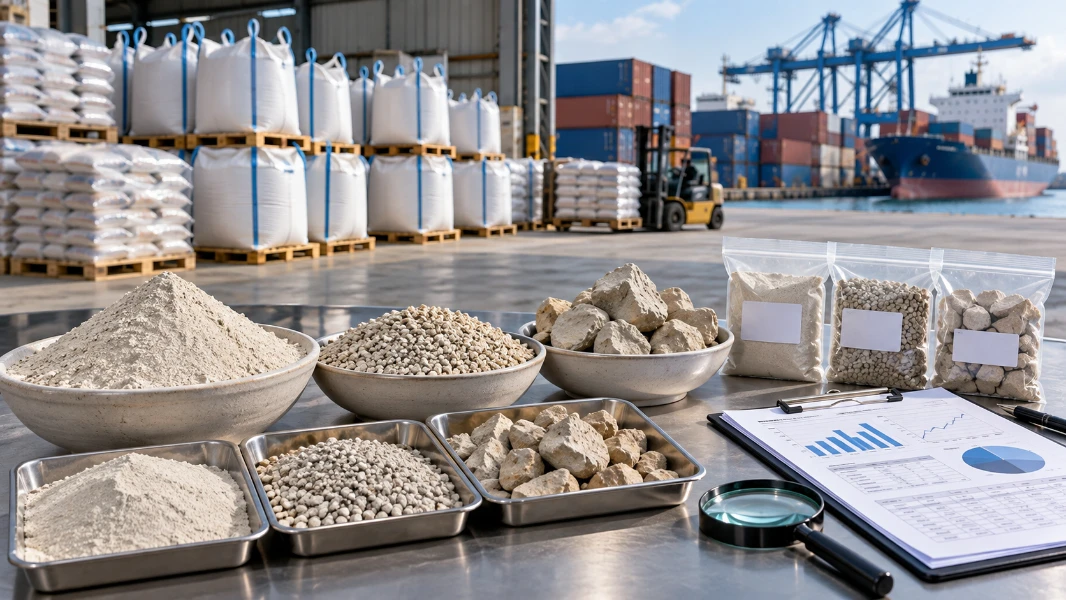
For companies evaluating industrial bentonite sourcing options, Vornaco provides information about available bentonite products and commercial inquiries through its Bentonite Supplier page.
Specific suitability for iron ore pelletizing should be confirmed through technical documentation and application testing rather than assumed from general bentonite specifications.
Frequently Asked Questions
Why is bentonite used in iron ore pelletizing?
Bentonite is used as a binder to support particle cohesion, green pellet formation, and mechanical integrity before thermal processing.
What is the typical bentonite dosage in iron ore pelletizing?
Some published research reports addition rates around 0.5–1.0% of moist concentrate. Actual requirements vary with ore characteristics, binder properties, and operating conditions.
Does bentonite increase iron ore pellet strength?
Bentonite can improve green pellet strength and handling properties, but its effects depend on moisture, dosage, ore composition, and process conditions.
What are the disadvantages of bentonite as a pellet binder?
Important considerations include binder cost and the introduction of silica and alumina, which may affect pellet chemistry and downstream processing.
Can organic binders replace bentonite in iron ore pelletizing?
Certain organic or hybrid binders can replace or partially replace bentonite in suitable systems, but performance must be evaluated across green, dried, preheated, and fired pellet stages.
Is sodium bentonite better for iron ore pelletizing?
Sodium-dominant bentonite can offer useful swelling and hydration characteristics, but suitability cannot be determined from sodium content alone. Pelletizing trials and technical specifications are necessary.
Conclusion
Bentonite plays an important role in iron ore pelletizing by supporting the formation and stability of iron ore agglomerates. Its performance depends on the interaction between mineral composition, hydration, particle-size characteristics, moisture conditions, and binder dosage.
For pelletizing plants, effective binder selection requires balancing pellet strength, product chemistry, operating efficiency, and cost.
Understanding these relationships helps industrial users evaluate bentonite materials more accurately and make technically informed sourcing decisions.
-
Iron Ore Pelletizing Process: An Overview — IntechOpen.
-
Binding Mechanisms in Wet Iron Ore Green Pellets with a Bentonite Binder — Powder Technology.
-
Effects of Bentonite Fiber Formation in Iron Ore Pelletization — International Journal of Mineral Processing.
-
A Review of Binders in Iron Ore Pelletization — Mineral Processing and Extractive Metallurgy Review.
-
Reducing Bentonite Usage in Iron Ore Pelletization Through a Novel Polymer-Type Binder — Journal of Materials Research and Technology.