Introduction: Choosing the Right Bentonite Type for Industrial Applications
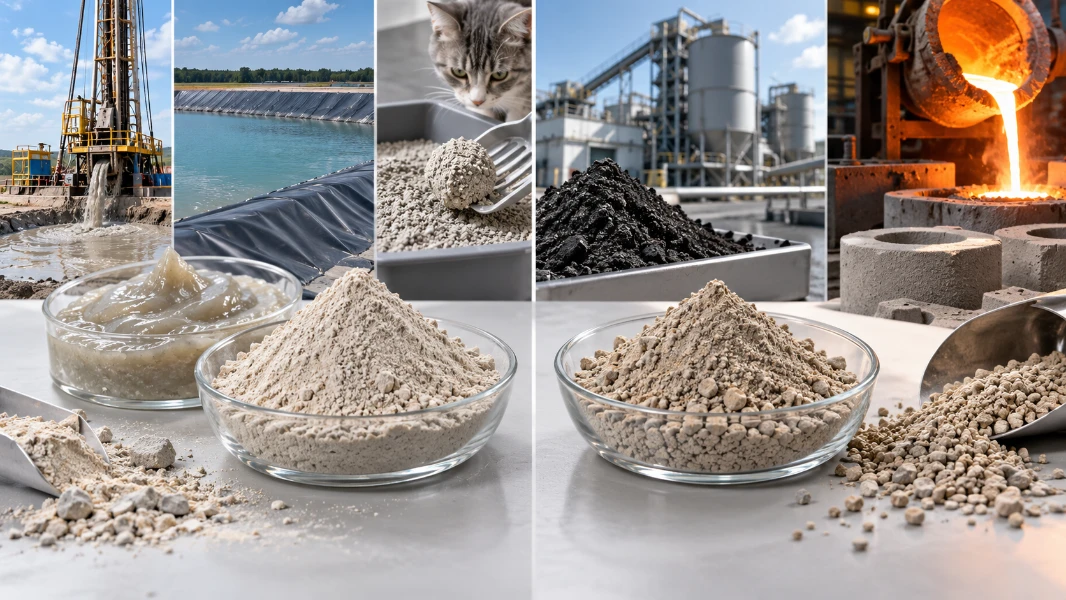
Bentonite is not a single standardized material with identical properties. Depending on its mineral composition and dominant exchangeable ions, bentonite is commonly classified into different types, with sodium bentonite and calcium bentonite being two of the most widely used categories.
Although both types are derived from montmorillonite-rich clay, their performance can be significantly different. The main difference appears in properties such as swelling capacity, water absorption, gel formation, and suitability for specific industrial applications.
For manufacturers and industrial buyers, selecting between sodium and calcium bentonite should be based on the required performance rather than simply choosing a general “bentonite” product.
This guide explains the key differences between sodium bentonite and calcium bentonite, their properties, common uses, and how buyers can select the appropriate type for their application.
What Is the Difference Between Sodium and Calcium Bentonite?
The primary difference between sodium bentonite and calcium bentonite is the dominant exchangeable cation within the clay structure.
| Feature | Sodium Bentonite | Calcium Bentonite |
|---|---|---|
| Main exchangeable ion | Sodium (Na⁺) | Calcium (Ca²⁺) |
| Swelling capacity | High | Low to moderate |
| Water absorption | Very high | Moderate |
| Gel formation | Strong | Limited |
| Typical applications | Sealing, drilling, cat litter | Absorbents, industrial uses |
Sodium bentonite is known for its ability to absorb water and expand significantly, while calcium bentonite generally has stronger adsorption properties but lower swelling behavior.
Sodium Bentonite: Properties and Characteristics
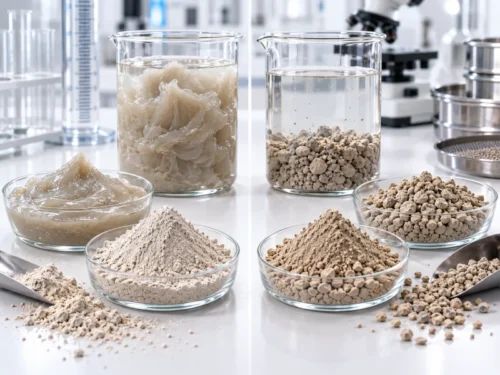
Sodium bentonite is a swelling clay primarily valued for its ability to expand when exposed to water. For a more detailed explanation of sodium bentonite properties, formation, and characteristics, you can learn more about sodium bentonite.
When hydrated, sodium bentonite particles absorb water and form a gel-like structure that provides sealing and binding properties.
Key Properties of Sodium Bentonite
Important characteristics include:
- High swelling index
- Strong water retention
- Excellent sealing capability
- High viscosity development
- Good binding performance
Because of these properties, sodium bentonite is commonly selected where expansion and impermeability are important.
Common Uses of Sodium Bentonite
1. Drilling Fluids
Sodium bentonite is widely used in drilling applications because it can increase viscosity and help control fluid loss.
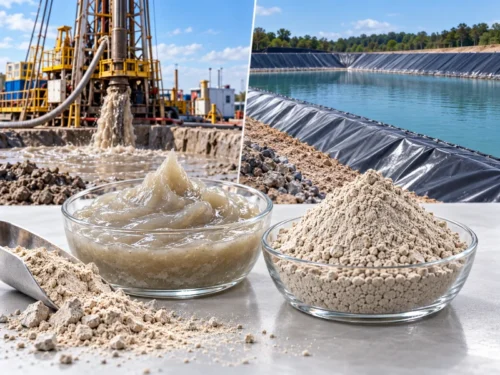
In drilling fluids, important performance factors include:
- Gel strength
- Filtration control
- Suspension capability
2. Geotechnical and Environmental Sealing
Due to its swelling ability, sodium bentonite is commonly used in:
- Landfill liners
- Pond sealing
- Waterproof barriers
- Soil stabilization applications
The ability to create a low-permeability layer makes it valuable in containment systems.
3. Bentonite Cat Litter Production
Sodium bentonite is also widely used in clumping cat litter because its swelling properties help form strong clumps and improve moisture absorption.
However, not every sodium bentonite source provides the same performance. Factors such as:
- Swelling index
- Particle size
- Absorption capacity
can affect final product quality.
Calcium Bentonite: Properties and Characteristics
Calcium bentonite contains calcium as the dominant exchangeable ion and generally has lower swelling ability compared with sodium bentonite. Understanding the specific characteristics and common applications of calcium bentonite helps buyers select the appropriate material for absorption and industrial uses.
However, it offers useful adsorption and absorption characteristics.
Key Properties of Calcium Bentonite
Important characteristics include:
- Good adsorption capacity
- Moderate water absorption
- Lower expansion
- Stable physical structure
Calcium bentonite is often selected when high swelling is not the primary requirement.
Common Uses of Calcium Bentonite
1. Industrial Absorbents
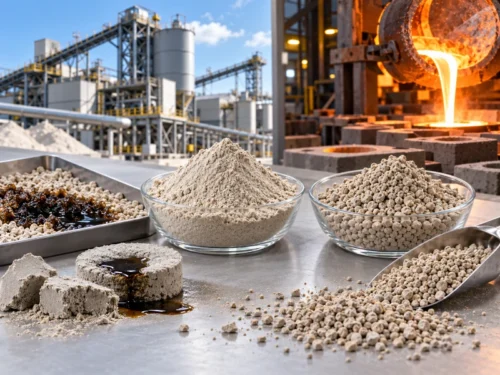
Calcium bentonite is commonly used in absorbent applications where moisture control and adsorption are required.
Examples include:
- Industrial absorbent products
- Oil and chemical spill absorbents
- Moisture-control materials
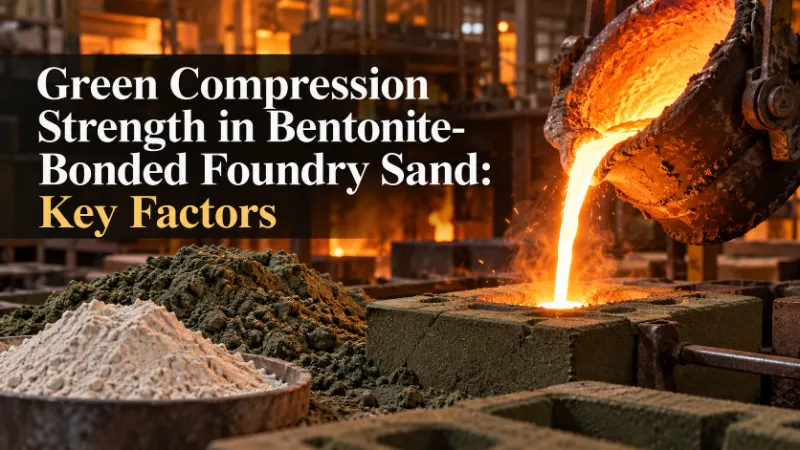
2. Foundry Applications
Bentonite is used in foundry processes as a binding material for molding sands.
Depending on the casting requirements, calcium or sodium bentonite may be selected based on:
- Binding strength
- Thermal stability
- Processing conditions
Sodium Bentonite vs Calcium Bentonite: Which One Should You Choose?
The correct choice depends on the final application.
A simple comparison:
| Application | Recommended Bentonite Type | Reason |
|---|---|---|
| Drilling fluids | Sodium Bentonite | High viscosity and swelling |
| Waterproofing | Sodium Bentonite | Low permeability after hydration |
| Clumping cat litter | Sodium Bentonite | Strong clumping ability |
| Absorbent products | Calcium Bentonite | Good adsorption properties |
| Some foundry applications | Calcium/Sodium depending on process | Binding requirements |
Example: Why Application Matters More Than Product Name
Imagine two buyers requesting “high-quality bentonite.”
The first buyer produces drilling fluids and needs:
- High swelling
- High viscosity
- Fluid-loss control
The second buyer produces industrial absorbents and needs:
- Adsorption capacity
- Moisture control
Although both request bentonite, they require different material characteristics.
This is why professional sourcing starts with understanding the application.
How Buyers Evaluate Bentonite Type Before Purchasing
Before selecting sodium or calcium bentonite, industrial buyers should review:
| Parameter | Why It Matters |
|---|---|
| Swelling index | Indicates expansion capability |
| Montmorillonite content | Influences mineral performance |
| Moisture content | Affects processing and storage |
| Particle size | Influences application performance |
| Absorption capacity | Important for absorbent uses |
| Viscosity | Critical for drilling applications |
Technical specifications should always be evaluated according to the intended application.
Can Sodium Bentonite Be Converted Into Calcium Bentonite?
Through ion exchange processes, bentonite properties can sometimes be modified by replacing dominant exchangeable ions.
However, commercial bentonite performance depends on the original mineral characteristics, processing method, and intended application.
Therefore, selecting the appropriate naturally suitable grade is usually preferred for industrial applications.
How to Select the Right Bentonite Supplier for Your Required Type
Choosing between sodium and calcium bentonite is only one part of the purchasing process.
A reliable supplier should provide:
- Clear product specifications
- Technical data sheets
- Quality analysis reports
- Consistent shipment quality
- Application-based recommendations
Buyers should avoid selecting bentonite only based on price because unsuitable material can increase production costs.
Conclusion
Sodium bentonite and calcium bentonite are both valuable industrial minerals, but their properties make them suitable for different applications.
Sodium bentonite is generally preferred when high swelling, sealing, and gel formation are required, while calcium bentonite is often selected for adsorption and absorbent applications.
Understanding these differences helps industrial buyers choose the correct bentonite type and avoid performance issues during production.
Need technical information about available bentonite grades and specifications?
Vornaco provides industrial mineral solutions and product details for buyers evaluating bentonite requirements.
Frequently Asked Questions
1. What is the main difference between sodium bentonite and calcium bentonite?
Answer:
The main difference between sodium bentonite and calcium bentonite is their dominant exchangeable ion and performance characteristics. Sodium bentonite has higher swelling capacity and water retention, while calcium bentonite generally provides better adsorption properties with lower swelling behavior.
2. Which type of bentonite has higher swelling capacity?
Answer:
Sodium bentonite generally has a much higher swelling capacity than calcium bentonite. This property makes it suitable for applications where expansion, sealing, and gel formation are required, such as drilling fluids and waterproofing systems.
3. Is sodium bentonite better than calcium bentonite?
Answer:
Neither type is universally better. The suitable choice depends on the intended application. Sodium bentonite is preferred for applications requiring high swelling and sealing performance, while calcium bentonite is often selected for absorption and adsorption-based applications.
4. Which bentonite is used for drilling fluids?
Answer:
Sodium bentonite is commonly used in drilling fluids because of its ability to increase viscosity, suspend particles, and control fluid loss. Its swelling properties help improve drilling performance in many applications.
5. How do I choose between sodium bentonite and calcium bentonite for an industrial application?
Answer:
The choice depends on the required performance characteristics, including swelling capacity, absorption, viscosity, particle size, and application conditions. Buyers should evaluate technical specifications and select the bentonite type that matches their production requirements.