
Introduction
Choosing the right kaolin supplier is an important decision for industries that depend on consistent mineral quality and reliable raw material supply. While price is an important factor, selecting a supplier based only on cost can create challenges related to product consistency, technical specifications, and long-term supply reliability.
Kaolin, also known as china clay, is a naturally occurring industrial mineral widely used in industries such as ceramics, paints, coatings, paper, plastics, rubber, and other manufacturing applications. However, not all kaolin products have the same characteristics. Factors such as chemical composition, particle size, brightness, and processing methods can significantly affect its performance in different industrial applications.
This Kaolin Supplier Guide explains the key factors businesses should consider when choosing a reliable kaolin exporter and how to evaluate a supplier for long-term cooperation.
What Makes a Reliable Kaolin Supplier?
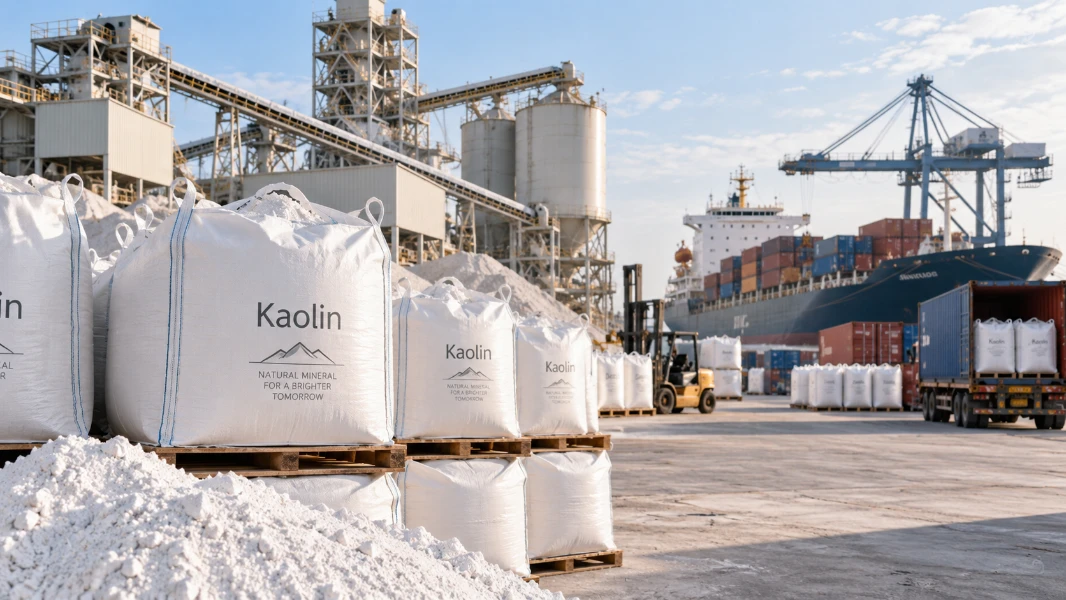
A professional kaolin supplier is not simply a company that provides raw material. A reliable supplier should have the technical knowledge, quality control processes, and export experience required to meet the specific requirements of industrial customers.
When evaluating a supplier, buyers should consider factors such as product consistency, technical specifications, processing capabilities, and the ability to provide high-quality kaolin products for different industrial applications.
When evaluating a kaolin supplier, several important factors should be considered:
Product quality consistency
Technical specifications
Mining and processing capabilities
Export experience
Supply capacity
Packaging and logistics solutions
Communication and customer support
A trustworthy supplier should be able to provide clear information about their kaolin products and demonstrate their ability to maintain stable quality over time.
1. Evaluate Kaolin Quality and Consistency
One of the most important factors when choosing a kaolin exporter is product consistency.
Industrial manufacturers require raw materials with predictable characteristics. Variations in kaolin quality can affect production efficiency, product appearance, and final performance.
Important quality parameters include:
Chemical Composition
The chemical composition of kaolin directly influences its suitability for different applications.
Key elements commonly analyzed include:
Aluminum oxide (Al₂O₃)
Silicon dioxide (SiO₂)
Iron oxide (Fe₂O₃)
Titanium dioxide (TiO₂)
Calcium and magnesium content
A reliable kaolin supplier should provide technical information and quality reports to help buyers understand the mineral characteristics.

Brightness and Whiteness
Brightness is a critical factor, especially for applications where appearance is important.
Industries such as:
Ceramic manufacturing
Paint production
Paper coating
often require kaolin with suitable brightness levels and low impurity content.
A professional supplier should be able to provide consistent brightness measurements for different batches.
Particle Size Distribution
Particle size plays an important role in kaolin performance.
Fine particle kaolin can provide advantages in applications requiring:
Smooth surface properties
Better dispersion
Improved coating performance
Before selecting a supplier, buyers should confirm whether the particle size distribution matches their industrial requirements.
2. Understand Your Industry Requirements Before Selecting a Supplier
Different industries require different kaolin characteristics. A supplier that understands these differences can provide more suitable solutions.
Kaolin for Ceramic Industry
The ceramic industry is one of the major consumers of kaolin.
In ceramic production, important properties may include:
Plasticity
Whiteness after firing
Mineral purity
Particle size
Thermal behavior
A suitable kaolin product can influence the quality, strength, and appearance of ceramic products.
Although kaolin is mainly used as an industrial mineral, different grades of kaolin are also used in personal care products. Understanding these specialized applications, such as kaolin clay for skin applications, can help buyers better recognize the importance of purity and mineral characteristics.
Kaolin for Paint and Coating Applications
In paints and coatings, kaolin is valued for properties such as:
Opacity improvement
Brightness
Dispersion ability
Surface smoothness
Manufacturers should select a supplier that can provide kaolin with specifications suitable for coating applications.
Kaolin for Paper Industry
The paper industry uses kaolin because of its ability to improve:
Surface quality
Printability
Brightness
Smoothness
For these applications, consistent particle size and mineral purity are essential.
In addition to industrial applications, kaolin is also used in cosmetic formulations where fine particle size and purity are important factors. Learn more about kaolin cosmetics applications and how kaolin is selected for specialized uses.
3. Check the Supplier’s Export Experience
Choosing a reliable kaolin exporter requires more than checking product quality. International mineral trading involves complex logistics and documentation processes.
An experienced exporter should understand:
International shipping requirements
Export documentation
Packaging standards
Customs procedures
Delivery schedules
A supplier with export experience can help reduce potential delays and ensure smoother international transactions.

4. Review Technical Documentation and Product Information
A professional kaolin supplier should provide detailed technical information about their products.
Important documents may include:
Technical Data Sheet (TDS)
A TDS usually provides information about:
Chemical analysis
Physical properties
Moisture content
Particle size
Recommended applications
Quality Reports
Quality control documents help buyers verify product consistency between different shipments.
Access to accurate technical documentation is a sign of a transparent and professional supplier.
5. Consider Supply Capacity and Long-Term Reliability
For industrial buyers, finding a supplier that can provide stable supply is essential.
Before choosing a kaolin exporter, consider:
Production capacity
Availability of raw material
Ability to handle large orders
Consistency between shipments
Long-term cooperation capability
A supplier that can maintain reliable supply helps manufacturers avoid production interruptions.
Common Mistakes When Choosing a Kaolin Supplier
- Choosing Only Based on Price
The lowest price does not always represent the best value.
Low-quality materials, inconsistent specifications, or unreliable delivery can increase costs in the long term.
- Ignoring Technical Specifications
Every industry has different requirements. Selecting kaolin without checking technical characteristics may lead to poor production results.
Buyers should always compare:
Chemical composition
Mineral purity
Particle size
Brightness
Moisture content
Not Checking Supplier Reliability
Before starting cooperation, companies should evaluate:
- Supplier background
- Export experience
- Quality control procedures
- Customer communication
A reliable supplier should be able to provide transparent information and professional support.
Questions to Ask Before Choosing a Kaolin Exporter
Before making a final decision, buyers should ask:
Does the supplier provide technical specifications?
A professional exporter should provide detailed product information.
Can the supplier maintain consistent quality?
Stable quality is essential for industrial applications.
Does the supplier have international export experience?
Export knowledge helps ensure smoother transportation and documentation.
Can the supplier support long-term supply requirements?
Long-term reliability is important for industrial partnerships.

Kaolin Supplier Selection Checklist
Before choosing a kaolin exporter, review the following points:
✅ Consistent product quality
✅ Clear technical specifications
✅ Reliable supply capacity
✅ Export experience
✅ Proper packaging solutions
✅ Professional communication
✅ Understanding of industrial applications
Since kaolin products are developed for different purposes, selecting the correct grade for the intended application is essential. Specific uses, such as edible kaolin clay applications, require separate evaluation and quality considerations.
Conclusion
Selecting a reliable kaolin supplier requires careful evaluation of product quality, technical specifications, export capability, and supply reliability.
A professional kaolin exporter should provide consistent mineral quality, accurate technical information, and dependable service to support long-term industrial partnerships.
By considering these factors, businesses can make a more informed decision and choose a supplier that meets their specific application requirements.


