Clumping vs. Non-Clumping Cat Litter: Key Differences, Pros and Cons
Choosing between clumping and non-clumping cat litter is not just a matter of convenience. The type of litter you use affects daily cleaning, waste removal, odor management, litter consumption, and how comfortable your cat feels using its litter box.
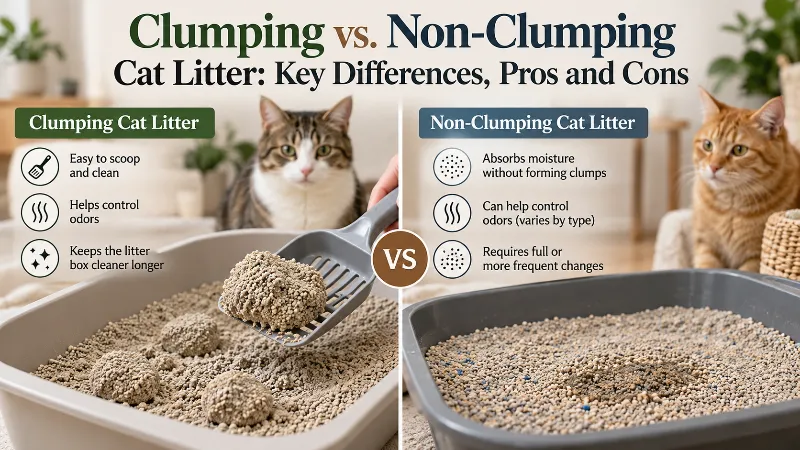
Clumping cat litter forms compact masses when it comes into contact with urine, allowing soiled material to be removed while the remaining litter stays in the tray. Non-clumping litter absorbs moisture without forming solid clumps, so wet material remains distributed through the litter and usually requires more frequent replacement of the contents.
Both types have advantages and limitations. The right choice depends on the litter material, your cleaning routine, your cat’s age and preferences, and how effectively the product controls moisture and odor.
This guide compares clumping and non-clumping cat litter, explains how each works, and identifies the factors worth considering before choosing a product.
What Is the Difference Between Clumping and Non-Clumping Cat Litter?
The main difference is what happens when the litter absorbs urine.
Clumping litter binds or aggregates around the wet area, creating a mass that can be lifted out with a scoop. Non-clumping litter absorbs liquid but generally does not form a removable, cohesive mass. As a result, cleaning routines differ even when both products absorb moisture effectively.
| Feature | Clumping Cat Litter | Non-Clumping Cat Litter |
|---|---|---|
| Response to urine | Forms removable clumps | Absorbs liquid without forming firm clumps |
| Daily cleaning | Remove urine clumps and feces | Remove feces and manage saturated or soiled litter according to the product’s instructions |
| Remaining litter | Relatively clean areas can remain in the tray | Moisture may spread through surrounding material |
| Odor management | Removing wet clumps can help remove odor sources promptly | Performance depends on absorption, odor-control properties, ventilation, and replacement frequency |
| Full litter replacement | Depends on the product, tray condition, and usage | Often needed more frequently when moisture becomes distributed through the litter |
| Material options | Commonly bentonite clay; other formulations are available | Clay, paper, wood, silica, and other materials |
| Cleaning routine | Usually involves regular scooping | May require more frequent replacement of the litter contents |
| Main consideration | Clump strength, dust, texture, and ease of removal | Absorbency, saturation, texture, and replacement requirements |
These are general differences, not guarantees about every product. A well-formulated non-clumping litter may manage moisture effectively, while a poor-quality clumping litter may produce weak clumps, excessive dust, or unwanted tracking.
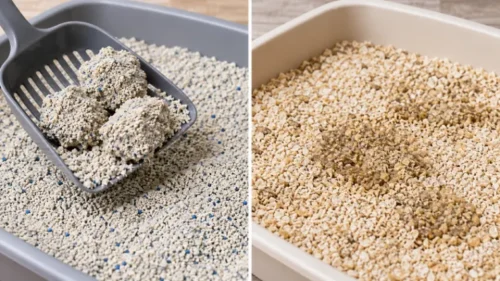
1. How Does Clumping Cat Litter Work?
Clumping cat litter is designed to bind together when exposed to moisture. The mechanism depends on the material used.
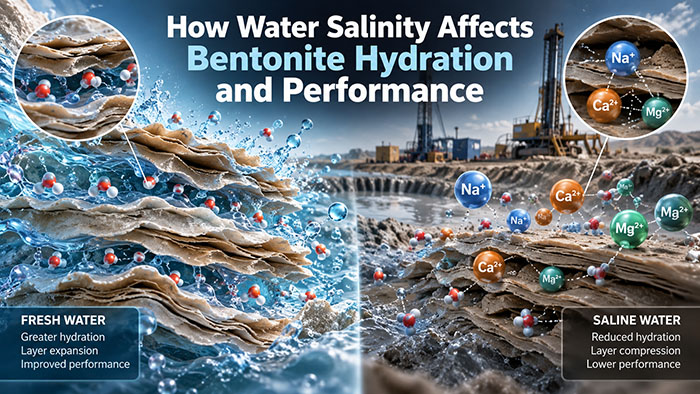
One widely used material is sodium bentonite, a clay that absorbs water and swells. When used in appropriately formulated cat litter, the wet granules bind together to create clumps that can be removed from the tray.
This makes it possible to remove urine-soaked litter without discarding all the unused material after every visit.
To understand how sodium bentonite differs from calcium bentonite in swelling and water absorption, read Vornaco’s guide to sodium bentonite vs. calcium bentonite.
Why sodium bentonite is commonly used
Sodium bentonite has swelling and water-absorption characteristics that make it suitable for many clumping cat litter formulations. However, the performance of the finished litter also depends on factors such as granule size, moisture absorption, clump integrity, and dust content.
Two products made with bentonite can behave differently. The mineral name alone does not establish how quickly a product will clump, how firmly the clumps will hold together, or how much dust it will produce.
For a closer look at the material used in this type of litter, explore Vornaco’s Bentonite Cat Litter product page.
What are the main advantages of clumping litter?
Easier removal of urine-soaked material: Solid clumps make it easier to identify and remove wet areas during daily cleaning.
More targeted cleaning: Instead of replacing the entire tray after every urination, you can remove the affected areas and retain the unused litter, provided the product remains clean and suitable for use.
Practical routine maintenance: For households that scoop the litter box daily, clumping products can make the cleaning process more straightforward.
What are the limitations?
Clumping litter is not automatically dust-free, odor-proof, or suitable for every cat. Some products produce loose or fragile clumps, while others may track outside the tray.
Very young kittens may also require a different approach. Cats Protection advises avoiding clumping litter for young kittens because they may investigate unfamiliar material with their mouths and could swallow it. If you are caring for a young kitten, follow appropriate veterinary guidance when selecting litter.
2. How Does Non-Clumping Cat Litter Work?
Non-clumping cat litter absorbs moisture without forming the firm, removable masses associated with clumping litter.
The material determines how this works. Some clay litters absorb liquid into their particles, while paper and wood products use porous fibers or pellets to absorb moisture. Silica-based products have their own moisture-absorption characteristics.
Because the wet material does not necessarily form a solid mass, urine can spread through surrounding litter. The amount of spread depends on the product’s absorbency, particle structure, tray depth, and how much liquid is deposited.
Advantages of non-clumping litter
A straightforward alternative to clumping products: Non-clumping litter may suit households that prefer a different material or texture.
Multiple material choices: Buyers can choose from products made with clay, recycled paper, wood, silica, and other materials.
Potentially suitable for specific needs: Some owners select non-clumping products for young kittens or because their cats accept a particular material better. Suitability still depends on the individual cat and the product.
Limitations of non-clumping litter
Because urine does not form a readily removable clump, managing wet areas may require more frequent changes of the litter contents.
The material can also become saturated over time. Once its useful absorption capacity is reduced, odor and cleanliness may deteriorate even if the surface still looks acceptable.
Non-clumping does not automatically mean lower dust, better environmental performance, or lower cost. Those characteristics depend on the specific product and how it is used.
3. Clumping vs. Non-Clumping Cat Litter for Odor Control
Odor control is one of the most important considerations when choosing cat litter, but clumping ability is only one part of the equation.
Cat urine and feces are the primary sources of litter-box odor. Removing waste promptly helps limit odor accumulation, regardless of the type of litter used.
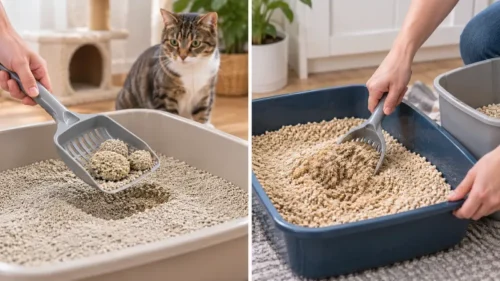
Why clumping litter can make odor management easier
When urine forms a removable clump, the owner can take the wet material out of the tray during routine scooping. This removes a portion of the waste rather than leaving all the absorbed liquid distributed through the litter.
However, clumping alone does not guarantee effective odor control. The product’s absorption properties, cleanliness, ventilation, and the frequency of scooping all matter.
Can non-clumping litter control odors effectively?
Yes. A non-clumping product can manage odor effectively when its material properties suit the application and the litter is replaced at appropriate intervals.
The main practical difference is that saturated material may be harder to isolate and remove selectively. As a result, the cleaning schedule can differ from that used with clumping litter.
Practical takeaway: If you want to remove urine-soaked material during daily cleaning, clumping litter may be more convenient. If you prefer a non-clumping material, pay particular attention to saturation, odor development, and the manufacturer’s replacement instructions.
4. Which Type of Cat Litter Is More Economical?
The purchase price alone does not determine which type offers better value.
A less expensive bag may require more frequent complete replacement, while a higher-priced product may allow unused litter to remain in the tray longer. The outcome depends on the amount of litter used, the number of cats, cleaning frequency, absorption capacity, and the product’s recommended replacement schedule.
Consider the following factors when comparing costs:
- Price per kilogram: Compare the cost of the same quantity rather than the price of differently sized bags.
- Consumption rate: Estimate how much litter your household uses over a typical month.
- Waste removal: Consider whether you can remove only the soiled areas or need to replace larger quantities.
- Cleaning requirements: Account for the amount of time and effort needed to keep the tray clean.
- Product performance: Weak clumps, poor absorption, or excessive tracking may increase waste and reduce value.
For a simple comparison, calculate:
Monthly litter cost = total quantity purchased per month × price per unit of weight
Use your actual consumption rather than assuming that one litter type always lasts longer than the other.
For buyers comparing mineral-based products, Vornaco also provides information about bentonite and its different industrial grades. Cat litter performance, however, should be evaluated using specifications relevant to the finished litter rather than industrial bentonite data alone.
5. Which Type Is Better for Different Cats and Households?
There is no universal winner. The most useful choice is the one that meets your cleaning requirements without discouraging your cat from using the litter box.
For owners who want easier daily scooping
Clumping litter is often a practical option because urine-soaked material can be removed selectively. This can simplify routine maintenance, especially when the tray is checked and cleaned regularly.
For owners who prefer alternative materials
Non-clumping litter may be appropriate if your cat accepts the material and you can maintain a cleaning schedule that prevents saturation and persistent odor.
Paper, wood, and other litter materials have different textures and absorption characteristics. Evaluate the actual product rather than assuming all non-clumping products perform alike.
For multi-cat households
With multiple cats, litter boxes may become soiled more quickly. The cleaning schedule and number of available trays become especially important.
Cornell University College of Veterinary Medicine recommends providing one litter box per cat, plus one additional box, and keeping the boxes clean. The choice between clumping and non-clumping litter should therefore be considered alongside box availability and maintenance.
For kittens and cats with particular needs
Young kittens may swallow unfamiliar materials, making litter selection particularly important. Cats with mobility problems, medical conditions, or a history of avoiding the litter box may also have specific needs.
If your cat suddenly stops using the litter box, do not assume the litter type is the only cause. Veterinary assessment may be appropriate, especially when changes in urination, pain, or other unusual behavior are present.
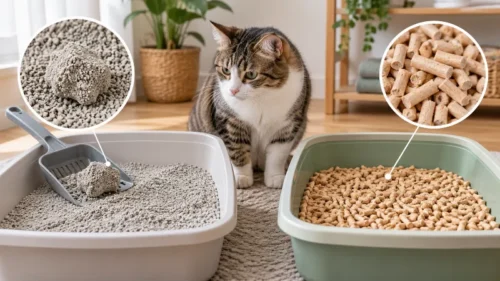
6. How to Choose a Good Clumping Cat Litter
If you decide to use clumping litter, compare the finished product on several practical characteristics.
Clump strength
Clumps should be sufficiently cohesive to remove without breaking apart excessively during ordinary scooping. Weak clumps can leave wet fragments behind and increase cleaning effort.
Absorbency
Absorption performance influences how the product handles urine and how the wet area develops. Compare product specifications or test samples under consistent conditions when evaluating products for commercial purchasing.
Dust level
Dust can affect the experience of both cats and owners. Look for clear product information about dust performance rather than assuming that every bentonite litter is low-dust.
Granule size and texture
Cats may prefer a fine, sand-like texture, but individual preferences differ. Observe how your cat responds to the product, especially after a change in litter type.
Odor-control performance
Assess whether the litter manages odor under normal household conditions. Added fragrance is not a substitute for regular cleaning, and some cats may dislike strongly scented products.
Consistency between batches
For bulk buyers, consistent granule size, absorption, clumping performance, and dust characteristics can be important when selecting a supplier.
If you are sourcing bentonite cat litter commercially, define the required product characteristics and request relevant information about the finished litter. Mineral specifications alone do not guarantee identical performance across finished products.
7. How Often Should You Clean or Replace Cat Litter?
The cleaning routine depends on the litter type, the number of cats, tray size, and product instructions.
For clumping litter, remove feces and urine clumps daily, replenish the litter as needed, and replace the contents and clean the tray according to the product’s instructions and actual condition.
For non-clumping litter, remove feces daily and monitor moisture and odor carefully. Replace the litter contents when they become saturated or no longer remain clean and suitable for use.
The tray should not be left dirty simply because the litter still appears dry on top. Moisture can accumulate below the surface.
Cornell’s guidance on house-soiling emphasizes daily removal of waste and keeping the litter box clean. Maintaining a suitable cleaning routine matters regardless of which litter type you choose.
Frequently Asked Questions
Is clumping cat litter better than non-clumping cat litter?
Neither type is best for every cat or household. Clumping litter can make it easier to remove urine-soaked material, while non-clumping litter may suit owners who prefer other materials. The best choice depends on the cat’s preferences, product performance, and cleaning routine.
Does clumping cat litter control odor better?
Clumping litter can help remove urine-soaked material selectively, which supports odor management. However, odor control also depends on absorption, product formulation, ventilation, and regular cleaning. A well-maintained non-clumping litter can also manage odors effectively.
Is bentonite cat litter clumping or non-clumping?
Sodium bentonite is commonly used in clumping cat litter because it absorbs water and swells, helping wet granules form removable clumps. However, the finished product’s performance depends on its formulation and physical properties.
Can non-clumping cat litter be cheaper than clumping litter?
It can have a lower purchase price, but that does not necessarily mean lower monthly costs. Compare the price per kilogram, actual consumption, replacement frequency, and the amount of litter discarded during routine cleaning.
Is clumping litter suitable for kittens?
Clumping litter is not generally recommended for very young kittens that may swallow unfamiliar material. Cats Protection advises using non-clumping litter for young kittens. For an individual kitten, follow veterinary advice and choose a product appropriate for its age and behavior.
How often should clumping cat litter be scooped?
Remove feces and urine clumps daily, add clean litter as needed, and replace the litter and clean the tray according to the product’s instructions and the tray’s condition. More frequent maintenance may be needed in multi-cat households.
Can I switch from non-clumping to clumping cat litter?
You can introduce a different litter, but cats may react to changes in texture, scent, or material. Introduce the new product gradually when practical, observe your cat’s response, and return to a familiar acceptable litter if the change causes avoidance.
What should I look for when buying bentonite cat litter in bulk?
Consider the finished product’s absorption, clump strength, dust level, granule-size distribution, packaging, and consistency between batches. Request product-specific specifications and assess samples where possible before committing to a large order.
Conclusion: Which Cat Litter Should You Choose?
Clumping cat litter is often the more convenient option for owners who want to remove urine-soaked material during daily cleaning. Non-clumping litter offers an alternative for households that prefer different materials or whose cats respond better to a particular product.
The most important factors are not the labels alone. Absorbency, odor management, dust, texture, cleaning requirements, and your cat’s acceptance all influence the final choice.
If you are considering a bentonite-based clumping product, evaluate the finished litter’s characteristics rather than assuming that every bentonite product performs identically.
Sources and Further Reading
- Merck Veterinary Manual — Providing a Litter Box for a Cat
- Cornell University College of Veterinary Medicine — Feline Behavior Problems: House Soiling
- Cats Protection — How to Choose the Best Cat Litter for Your Cat
- 2022 ISFM/AAFP Cat Friendly Veterinary Environment Guidelines
These sources provide general guidance on litter-box preferences and care. Product-specific claims should be based on the relevant manufacturer’s specifications and testing.